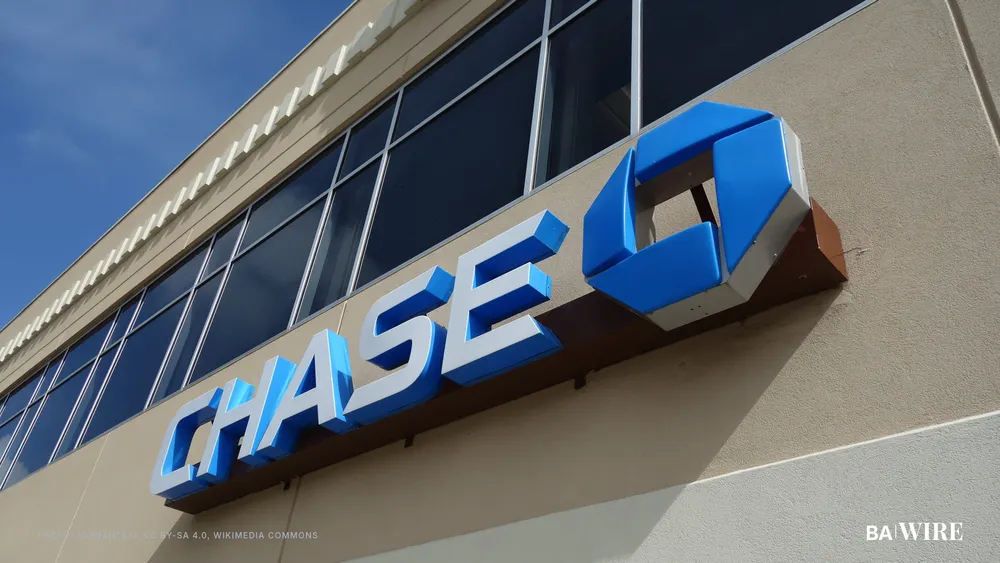
JPMorgan Chase says it banks 7.4 million small businesses. On Monday, a software bug at the bank slowed their payments, and the slowdown spilled into other banks that were on the other side of those transactions.
Chase blamed "a temporary issue related to a software bug in on-premise hardware systems," and said "there is no evidence it is cyber-related," in a statement to CNBC. The bank said customers could still reach their accounts and funds, and that it was working to fix the problem by the end of the day.
For a business owner, "taking longer than usual" is not a small thing on a Monday. It is payroll, rent, vendor wires and card deposits, all at once. And it landed at the end of a week in which, by our count, four other systems that businesses rely on also failed.
What broke, and when
Users reported errors as early as 11:30 a.m. ET, according to CNBC. By 2 p.m. ET, nearly 4,800 people had reported problems with Chase on Downdetector, the most of any bank, CBS News reported. Some customers saw a message that read: "Some services aren't available. We're working on them. Please try back later."
About 52% of the Chase reports were about balances and transactions, 21% about web log-in and 17% about transfers, The Hill found, according to The Next Web. Downdetector counts user reports, not confirmed failures.
The problem reached past the app. NBC News reported that it hit online and in-person branch transactions. A Chase customer told CBS News he could not deposit a check at a Dallas branch, and a teller told the customer ahead of him only that the "system was down."
Customers of Bank of America, Wells Fargo, U.S. Bank, Capital One and Truist also reported problems on Downdetector, per CBS. Only Chase has confirmed a problem on its side. U.S. Bank said it was "not directly impacted," but that Zelle payments to and from other banks "may experience transaction delays." Zelle said its service was "operating as it should." Capital One, Truist and PNC told the BBC they were not affected.
As of 6 p.m. ET Monday, Chase had not announced that the problem was fixed. Its latest public statement, posted on X at 3:57 p.m. ET, said it was "working diligently to resolve this by the end of the day today." NBC News, updated at 5:43 p.m. ET, reported that it was unclear how long a fix would take, citing a source familiar with the matter. JPMorgan shares were down 2.6% at 2:45 p.m. ET, Bloomberg reported.
What owners said
Owners took to X to describe what it looked like from behind the counter.
- "I couldn't process any payments this morning because Chase bank's system was down. My employees can't access their paystubs," one X user posted.
- A media company CEO in Atlanta posted that Chase blocked withdrawals over $1,000 from both his business and personal checking accounts, which he said the bank called a "glitch."
- A construction company owner in the Mountain West wrote: "This is why payroll shouldn't live at one bank."
In our count of public X posts, posts about bank outages hit 5,194 by 5:15 p.m. ET Monday, against 1,029 for all of Sunday. They peaked between 2 and 3 p.m. ET.
Five failures in five days
Chase was not the first system to break this week. Each failure had its own cause. None has been tied to a cyberattack. But they landed one after another.
- Nov. 12 to 13, Microsoft 365. Outlook, Teams and other Microsoft 365 services were down for just under 24 hours, from a software defect introduced in July, according to Microsoft's preliminary report, via Ars Technica. Downdetector logged nearly 130,000 reports in 74 countries, The Guardian reported.
- Nov. 13, the FAA. A router replacement at a remote site set off a nationwide ground stop from about 3:30 p.m. to 8:15 p.m. ET. Operators canceled about 12,462 flights that day, the FAA said.
- Nov. 13 to 14, Workday. The payroll and HR platform put customer systems into maintenance mode after a backup-system test, leaving employees unable to clock in, see pay information or request time off, Engadget reported. Most customers were back by Saturday morning, according to customer status notices.
- Nov. 16, United Airlines. United reported a widespread system outage that held departing flights, AP reported.
- Nov. 16, Chase. The software bug described above.
Wall Street had its own bad day. Nvidia fell 4.1% on Monday after its CEO, Jensen Huang, resigned last Thursday, CNBC reported. The S&P 500 lost 1.9% and the Nasdaq fell 2.5%, according to AP.
What the pile-up means for Main Street
The latest surveys were taken before this week, so none of them captures it yet. Here is where owners and their customers stood going in.
- Small-business optimism was 97.8 in October, just below its 53-year average of 98.0, according to NFIB. The NFIB Uncertainty Index fell 6 points to 84, but that is still well above its historical average of 68, per Haver Analytics.
- Credit was getting more expensive. A net 13% of owners said they paid a higher rate on their most recent loan, the highest since August 2024, NFIB said.
- Prices were going up. A net 37% of owners planned to raise prices, the highest since July 2022 (NFIB).
- Customers were tired. University of Michigan consumer sentiment was 51.0 in early November. About 57% of consumers said on their own that high prices had worn down their living standards, and the survey noted "growing anxiety over a possible AI bubble" (University of Michigan).
Put together, that means owners went into this week paying more to borrow and selling to cautious customers. A payment glitch hurts most when there is no cushion. For a business living week to week, a day of stuck payments can mean a late payroll run, a bounced vendor payment or a missed loan draft. The next NFIB report, due in December, will be the first to show whether this week shook confidence.
What to do tonight and this week
These steps are general practice for owners, not instructions from Chase.
- Do not resend payroll or wires yet. A delayed payment can still post once the backlog clears. Resending can pay staff or vendors twice. Check the status of each ACH file and wire first.
- Tell people who are waiting on you. A short note to staff and key vendors now heads off calls and late fees later.
- Screenshot everything. Save error messages and failed transactions with the time showing. A security expert quoted by CBS News advised customers to do this and then ask the bank to reverse any fees the outage caused.
- Check card settlements and deposits over the next few days. Match what your processor says it paid against what actually landed in your account.
- Watch for outage scams. Ignore unsolicited emails, texts and calls about "restoring" your account. Use the number on your card or the bank's website.
- Keep a second operating account at a different bank. Park a few weeks of payroll there, and know how to switch your payroll provider to it.
- Have a backup way to take payments. A second card processor or a payment link from another provider keeps the register open when one rail is down.
- Write down who to call. Your banker's direct line, your payroll provider's support number, and the manual steps for a wire.
If you work with distressed businesses
Turnaround and restructuring pros: ask clients this week whether they bank and run payroll at one institution. Single-bank concentration is now a live risk that has already played out.
Lenders: expect calls from borrowers whose automatic loan drafts failed or ran late on Monday. Decide now how you will treat a missed draft caused by the bank, not the borrower.
Brokers and advisors: a business that lived through this week without a backup account is a good candidate for that conversation. Lead with the fix, not the fear.
Each Friday, the Friday Brief tracks the stories that move small-business cash, credit and distress, with every number sourced. Get it free here.
Sources
- CNBC, JPMorgan Chase says temporary software bug is affecting consumer banking, Nov. 16, 2026
- CBS News, Major U.S. banks report widespread service outages, Nov. 16, 2026
- NBC News, Nationwide outage impacts Chase banking online and some branches, Nov. 16, 2026
- The Hill, Chase, Bank of America, Wells Fargo customers report trouble accessing accounts, Nov. 16, 2026
- The Next Web, Chase blames a software bug for online banking problems at US banks, Nov. 16, 2026
- Chase (@Chase) statement on X, Nov. 16, 2026, 3:57 p.m. ET
- BBC News, Outages reported at major US banks (live), Nov. 16, 2026
- Bloomberg via The Straits Times, JPMorgan works to fix technical issue, Nov. 16, 2026
- JPMorgan Chase, Chase to open more than 160 branches in over 30 states in 2026 (small-business customer count)
- Ars Technica, Microsoft details how three problems combined for a global outage
- The Guardian, Microsoft scrambles to fix global outage affecting Teams and Outlook, Nov. 13, 2026
- FAA, Nationwide Ground Stop: Questions and Answers
- Engadget, Outage at HR platform Workday locks millions of employees out of their accounts
- Georgia Tech IT status notice on the Workday outage, Nov. 13 to 14, 2026
- AP, United Airlines says it has a widespread system outage, Nov. 16, 2026
- CNBC, Nvidia stock slides as investors weigh Jensen Huang resignation, Nov. 16, 2026
- AP, Stocks tumble on Wall Street as Nvidia leads another sell-off, Nov. 16, 2026
- NFIB, Small Business Optimism Index, October 2026, released Nov. 10, 2026
- Haver Analytics, NFIB Small Business Optimism little changed in October
- University of Michigan, Surveys of Consumers, preliminary November 2026
- BA Wire count of public X posts matching a bank-outage search (Chase, Bank of America, Wells Fargo, U.S. Bank or Zelle with down, outage or glitch), Nov. 15 to 16, 2026