By BA Wire Data Desk
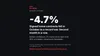
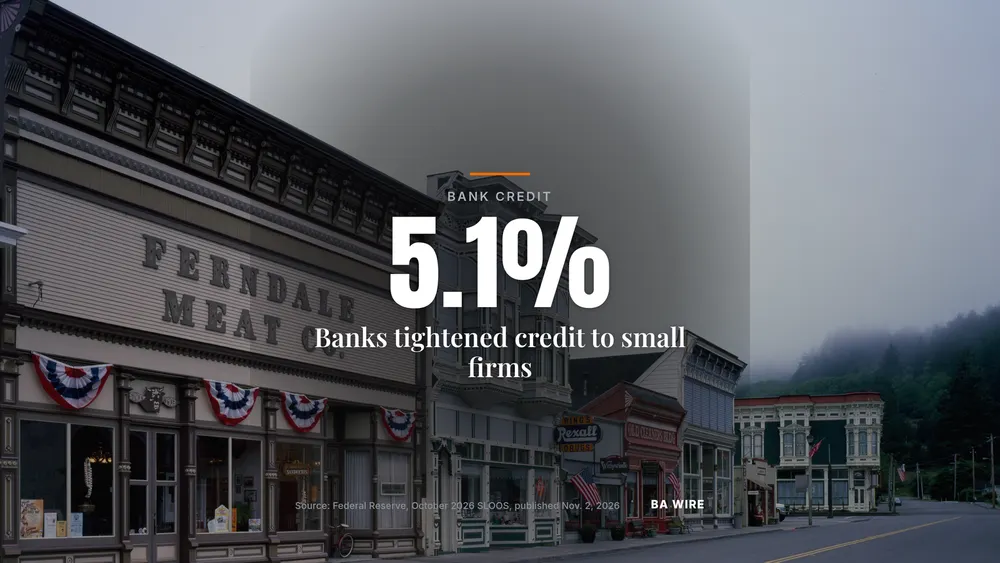
A net 5.1 percent of domestic banks tightened standards on commercial and industrial loans to small firms in the October 2026 Senior Loan Officer Opinion Survey, the Federal Reserve reported on Nov. 2, 2026. Standards on C&I loans to large and middle-market firms were basically unchanged, at a net 1.7 percent. The Fed defines "basically unchanged" as a net percentage between 0 and 5 percent, inclusive, and defines small firms as those with annual sales of less than $50 million. Large and middle-market firms are those with sales of $50 million or more. The survey drew responses from 61 domestic banks.
Demand weakened on both sides of that size cut. A net 11.9 percent of domestic banks reported weaker C&I demand from small firms, and a net 11.7 percent reported weaker demand from large and middle-market firms, according to the official Figure 1 chart data (2026:4 observation). Banks also reported, on net, that they had reduced spreads of loan rates over their cost of funds: a net 6.8 percent for small firms and a net 15.0 percent for large and middle-market firms, meaning fewer banks were widening spreads than were narrowing them. The narrative summary said banks tightened premiums charged on riskier loans for firms of all sizes, and tightened collateralization requirements and the use of interest rate floors for small firms. The most frequently cited reasons for tighter standards were a less favorable or more uncertain economic outlook and a worsening of industry-specific problems.
The split is the story. The official bank survey shows the credit window narrowing for firms under $50 million in sales, while the large-firm window was little changed. Weaker demand arrived with that tightening. Narrower spreads on average do not cancel tighter collateral, floors, and risk premiums on the loans that are still being made.
Owners of firms under the $50 million threshold should expect more documentation, more collateral questions, and less flexibility on floors, even if the quoted spread is not wider. That is a reason to know the all-in terms, not just the rate. Buyers should ask whether a target's bank still treats the credit as routine, or as a risk-premium file. The SLOOS is an opinion survey of loan officers, not a rejection-rate census, and it is the official read on how bank credit just moved for small firms.
Sources
- Federal Reserve, October 2026 Senior Loan Officer Opinion Survey on Bank Lending Practices (Survey received 2026-09-21 to 2026-10-05; published 2026-11-02)
- Federal Reserve SLOOS October 2026 chart data, Figure 1 (2026:4 observation in the official chart file, corresponding to the October 2026 survey)